
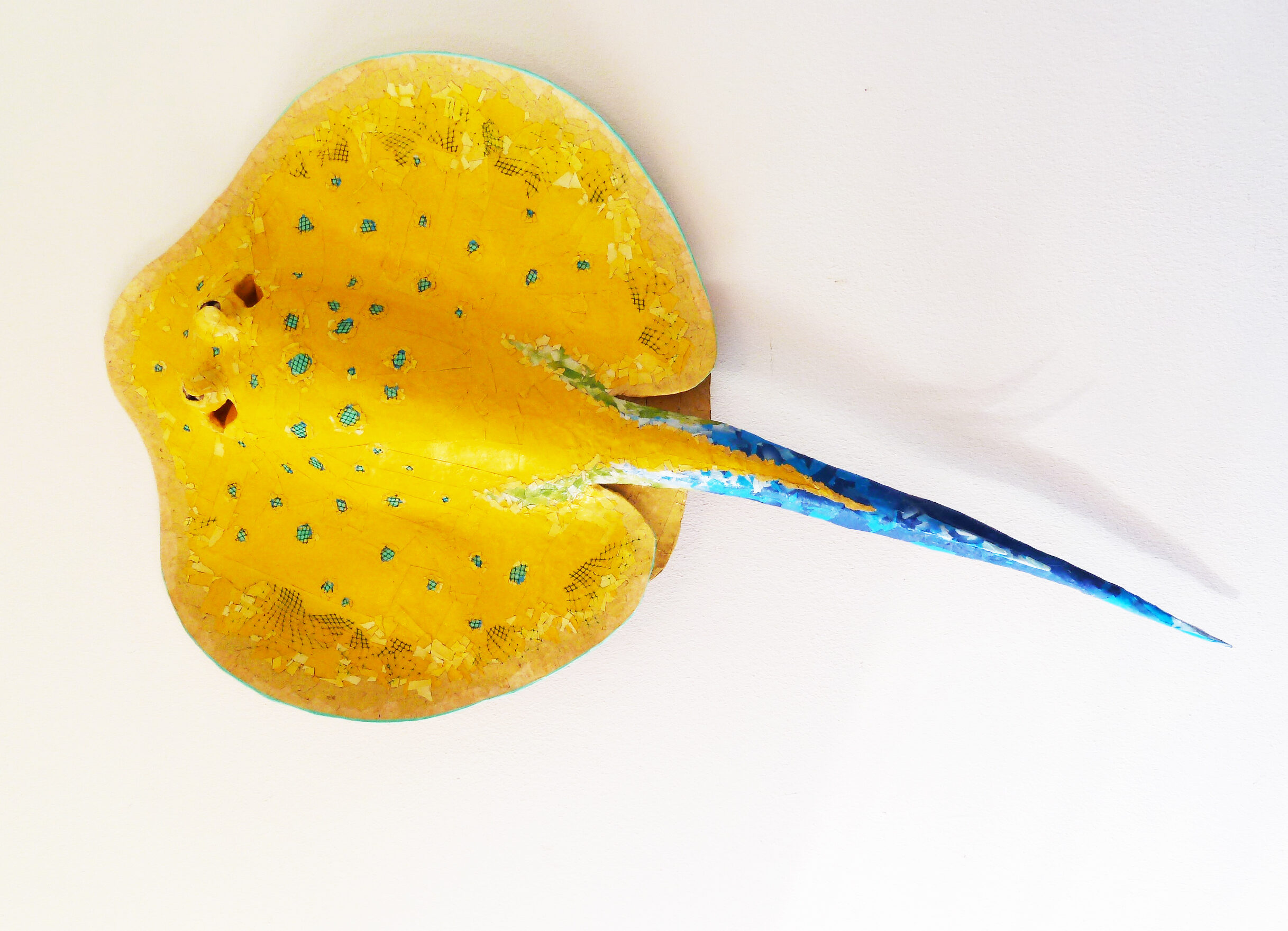
Ray B
Ray B, 2021
Yulia Shtern, Magical Zoo Series
20 1/2 x 37 1/4 x 3 3/4″
upcycled materials, glue, varnish
3500
A Bluespotted Ribbontail Ray is common to the tropical reefs of the Indian and the Pacific oceans, from the northern shores of Australia to Madagascar and the eastern coastline of Africa. It can be found in the tidal zones from the coast to a depth of about 100 feet (30 m). It is often confused with a Bluespotted Stingray because of the similarities in their colouration. Unlike most other rays, these species rarely bury themselves in the sand. They usually spend their days hiding alone in the crevices of the coral reefs. In the evening they gather in small groups to follow the rising tides in search for food such as small fish, clams, sea snails, crabs, and shrimp. These rays usually prefer to avoid confrontations. They have two venomous spines on their tails that are used for defence, and can inflict a serious injury upon a human if they feel threatened. The natural lifespan of a Bluespotted ribbontail ray is currently unknown. Females can have as many as seven pups in a single litter. The babies grow in eggs side their mother’s body, and are born live shortly after hatching. When born, they are a miniature version of an adult in both colour and body proportions. Because of their attractive colour, Bluespotted ribbontail rays are often sold as pets to aquarium enthusiasts. However these animals are ill suited for captivity, and don’t survive in a home aquarium for long.
Conservation status: near threatened. Bluespotted ribbontail rays are negatively impacted by commercial fishing, coral reef degradation, and capture for pet trade.
$3,500.00
1 in stock