
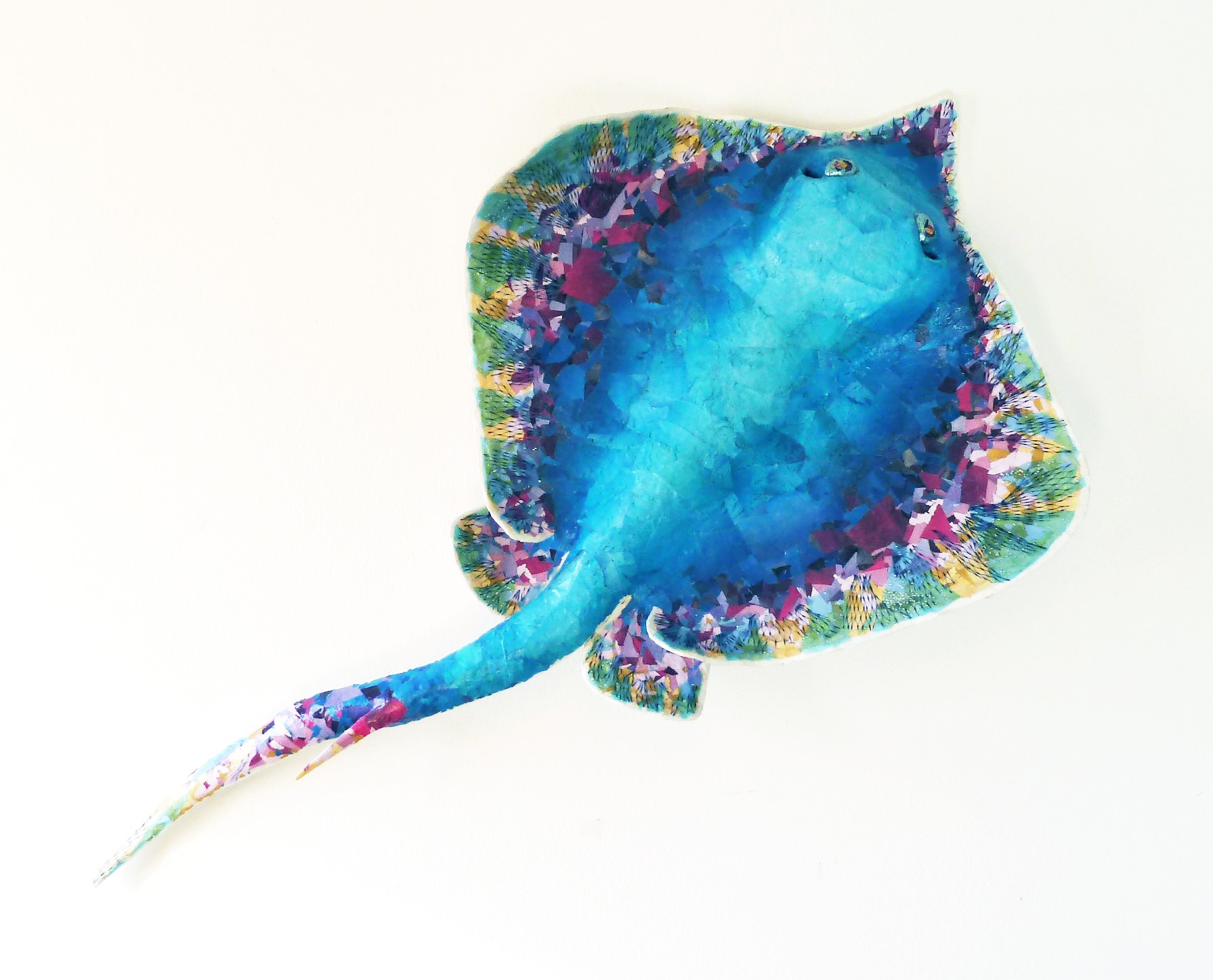
Ray A
Ray A, 2021
Yulia Shtern, Magical Zoo Series
26 x 32 x 4″
upcycled materials, glue, varnish
3700
One of the smallest stingray species, the Atlantic Stingray inhabits the shallow waters and estuaries of the North American Atlantic coast. It can tolerate low salinity, and can enter fresh water. Numerous sightings have been reported in rivers around Florida and the Gulf of Mexico. It prefers warmer waters, and migrates to deeper waters in the winter. When inshore, it can be found in the sand at the ocean floor, and at depths of about 6 – 20 feet (2 – 6 meters). After migrating, it has been observed in waters as deep as 80 feet (25 meters). Atlantic stingrays live to about 9 years in the wild, and usually are solitary, coming together only for breeding and migration and creating groups as large as thousands of individuals. Their mating behaviour involves the males biting the females along their fins and body; for that purpose the males’ teeth develop curved spikes during the mating season. The Atlantic stingrays are highly sensitive to weak electric fields, which helps them to detect their prey even when it is buried in the sand. The Atlantic stingrays are generally non-agressive, however they can be dangerous to humans because of their defensive sharp venomous barb. The venom is typically non-lethal. A sting can produce a number of symptoms including intense pain, inflammation, and muscle spasms. Perhaps for this reason a grouping of stingrays is called a fever.
Conservation status: least concern.
$3,700.00
1 in stock